


The Evolution of Enterprise AI
The landscape of enterprise artificial intelligence is shifting rapidly. While chatbots and virtual assistants have dominated the narrative for the past few years, the real value is beginning to emerge in the form of meaningful decision support and autonomous operations.
Companies are no longer just asking, "How can we talk to our customers?" but rather, "How can we predict their needs before they even know them?" This shift requires a fundamental rethinking of data architecture and operational workflows.
Phase 1: The Assistant Era (2018-2023)
The initial wave of enterprise AI was defined by large language models (LLMs) acting as diverse assistants. These systems could summarize documents, draft emails, and answer basic customer queries. While useful, they were largely reactive.
Infographic: The AI Maturity Curve
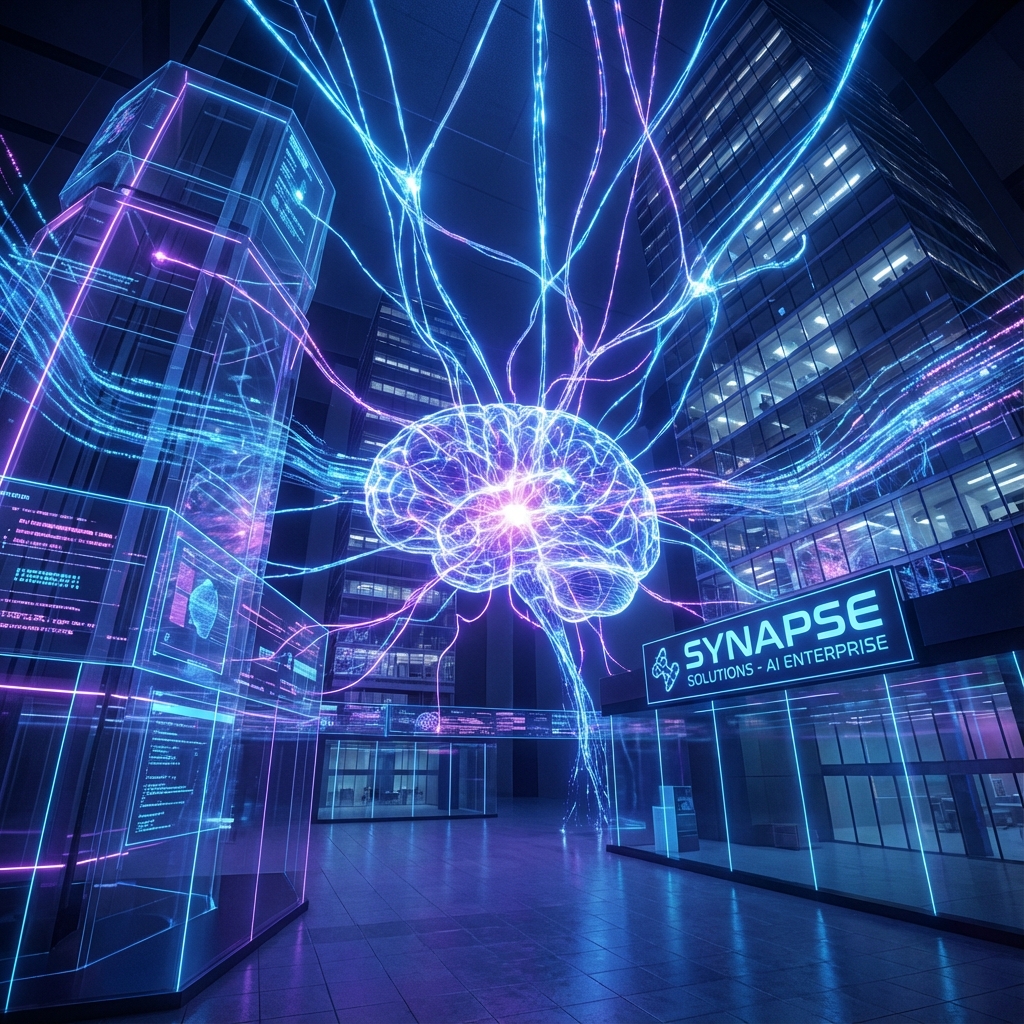
Phase 2: The Agentic Era (2024-Present)
We are now entering the era of "Agentic AI." Unlike passive tools that wait for input, these agents can proactively monitor systems, identify anomalies, and execute complex workflows without human intervention. From supply chain optimization to real-time cybersecurity defense, the applications are limitless.
Autonomous Agents: The New Workforce
Autonomous agents represent the next leap forward. They possess three distinct capabilities that separate them from previous generations of AI:
- Perception: The ability to ingest real-time data from multiple unstructured sources (Slack, Email, Logs).
- Reasoning: Using chain-of-thought processing to plan a sequence of actions.
- Action: Triggering API calls to external software (Salesforce, JIRA, AWS) to complete tasks.
"The future belongs to organizations that can successfully integrate human creativity with machine efficiency."
Key Drivers of Adoption
- Hyper-Personalization at Scale: AI enables brands to deliver unique experiences to millions of users simultaneously.
- Operational Resilience: Automated systems can self-heal and adapt to changing conditions faster than any human team.
- Data-Driven Decision Making: Moving from intuition-based strategies to evidence-based execution.
Case Study: Financial Services
Consider a global bank using autonomous agents for fraud detection. Instead of just flagging a transaction, the agent can:
- Analyze the user's geolocation and device fingerprint.
- Cross-reference with recent spending patterns.
- Temporarily freeze the specific transaction channel.
- Draft a personalized SMS to the customer via Twilio.
- Update the risk profile in the central ledger.
All of this happens in less than 400 milliseconds. This is the power of autonomous enterprise AI.
The Road Ahead
As we look toward 2030, the question isn't whether your business will adopt AI, but how deeply it will be woven into the fabric of your organization. The winners will be those who trust their agents to act, not just advise.